The moment that made me look closer
When I test FrameOS, I often end up doing slightly odd things in front of my Mac. Recently, that meant playing a beat on my phone and clicking my fingers along with it. The phone audio sounded right while recording, but watching the result made me question whether my camera was keeping up.
A demo can have a clear picture and good sound yet still feel wrong if a face, a tap or a hand movement arrives at the wrong moment. That small test sent me back through the recording workflow.
Several sources, one recording
FrameOS can combine your device’s picture and sound, your microphone, and camera video, including Continuity Camera. They belong to the same moment, but each source travels through its own capture and playback path. Hearing them together while recording doesn’t tell the whole story of the saved file.
The Mac app is written in Swift, with AVFoundation and CoreMedia doing much of the media work. Those frameworks provide the tools to manage timing, but the application still has to preserve the relationship between the sources as a recording moves through capture, review and export.
A test I could repeat
I needed something more repeatable than trying to hear whether a finger click landed on a song. PhotoJoseph’s downloadable audio and video sync tests were useful here. They give the picture and sound a common reference, making it easier to inspect what actually happened.
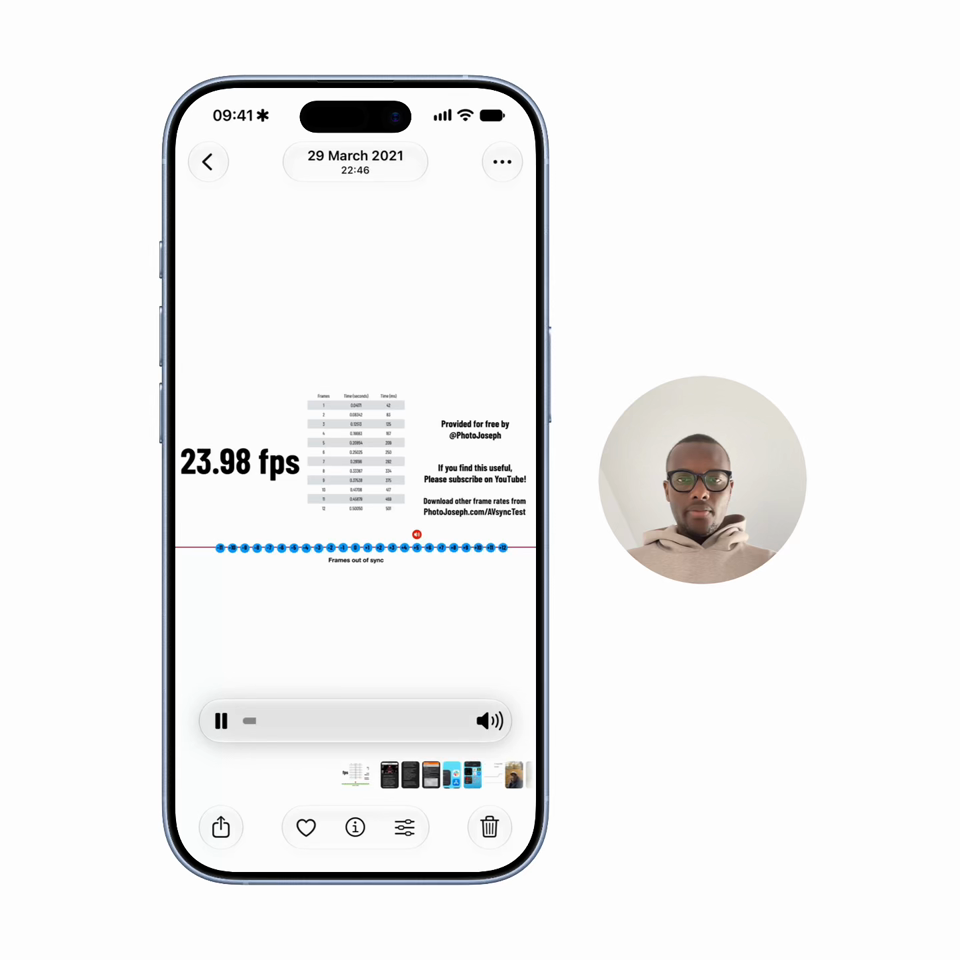
For this kind of check, I use a downloaded test at an appropriate frame rate rather than rely on YouTube playback. A few visible claps help too: I can compare the instant my hands meet with the sound recorded by the microphone. Repeating the check near the beginning and end helps reveal whether the timing changes.
Following the recording all the way through
The other lesson was to follow the recording all the way through. I compare the captured sources, what plays in the editor, and the finished export. A result that looks aligned in one place still needs checking in the next.
This is the kind of work that rarely becomes a feature card. There is no new button to show for it. But when you record a walkthrough or speak over an app demo, timing is part of whether the explanation feels natural.
The latest recordings feel more cohesive, with speech and movement sitting more naturally together. There will always be more devices and recording setups to test. I’m continuing to improve how I measure those cases, and I’m grateful to creators such as PhotoJoseph who make useful testing resources available.